

Bridging the Labeling Gap
Mike Bieda • October 22, 2021
Labeling machinery manufacturers generally address the needs of customers with high volume labeling requirements. But what about those organizations with the medium-to low volume needs? Perhaps a start-up organization with a new product they’re trying to get off the ground. Another might be a large organization conducting a short run market test. Possibly a new product shape that is not conducive to traditional product handling. These are just a few issues confronting many production and contract packaging organizations. The answer to all of these questions is semi-automatic labeling.
Semi-automatic labeling has traditionally been viewed as a table-top machine that works more like a glorified tape dispenser. Semi-automatic labelers were generally designed either by small job shops without a standard manufacturing process, or as an
afterthought, cobbled together by inline labeling
machinery manufacturers. Design Strategy, Operator’s Manuals, Spare Parts Lists, and Bills of Material regarding semi-automatic labeling as a rule do not receive the proper attention found in automatic labeling systems.
The fact is that there is a gap in production labeling that can only be filled by the semiautomatic
labeling process. The criteria for semi-automatic label production can include any of the following items:
• Labeling volume under 6,000 products per day.
• Product shapes not conducive to automated
product handling.
• Short run volumes under 30,000 products.
• Tight label-to-product tolerances unattainable by
other automation.
• Budgetary limitations.
• Manual product handling that will not dissipate with
automatic labeling.
• Low to moderate labor costs.
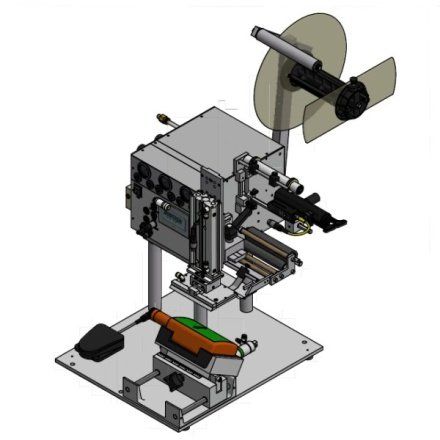
This R322 system automatically applies pressure sensitive labels to a variety of paint cans from one gallon’s to 12 ounce spray cans. The round product system is equipped with a wide label SL2000 label applicator (web widths up to 8.125”/207mm). The system includes a product encapsulator to accurately and synchronously adhere synthetic labels.
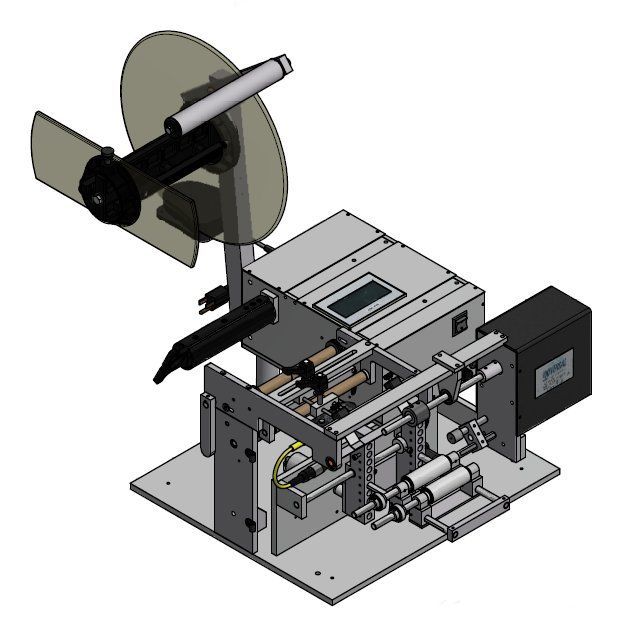
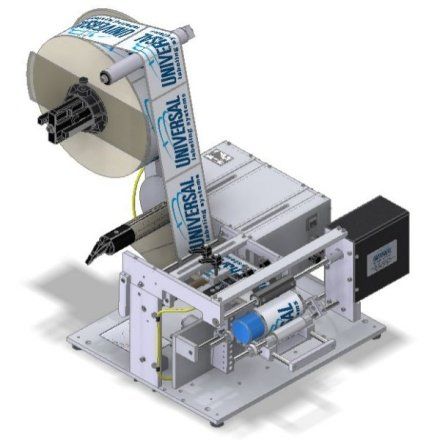
The R310 can apply a single wrap label or can apply a front & back label to liquor or wine bottles. The average operator can label up to 6,000 units per day, accurately and effectively. The R310 includes a table top mount, stepper driven motor, and foot switch activation.
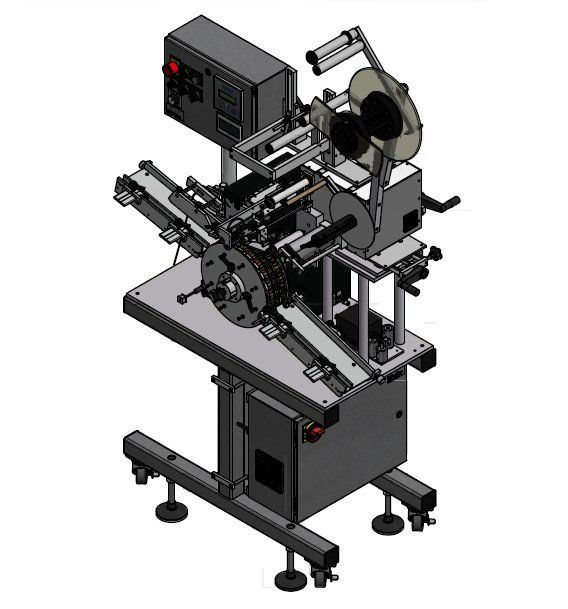
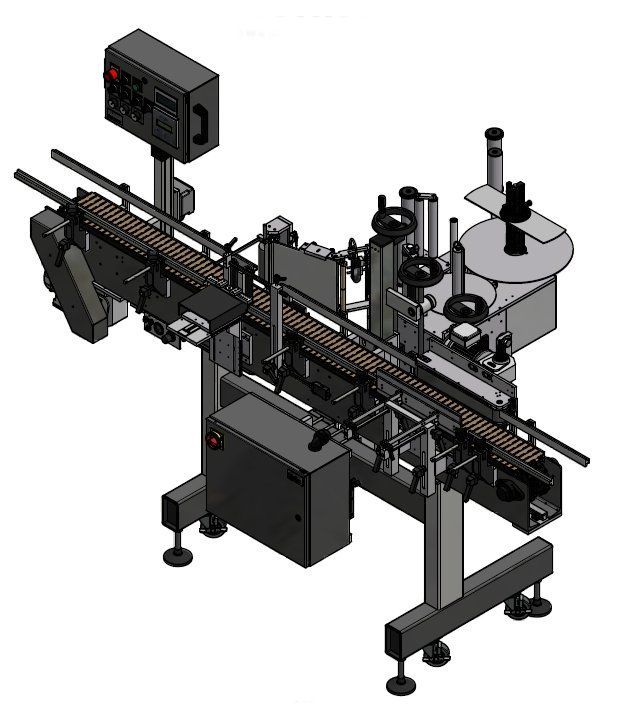
This automatic system is designed to apply labels to a variety of small diameter products. The operator places the products in a feed chute. The products are picked up by a carrousel wheel that rotates the products into position for labeling.
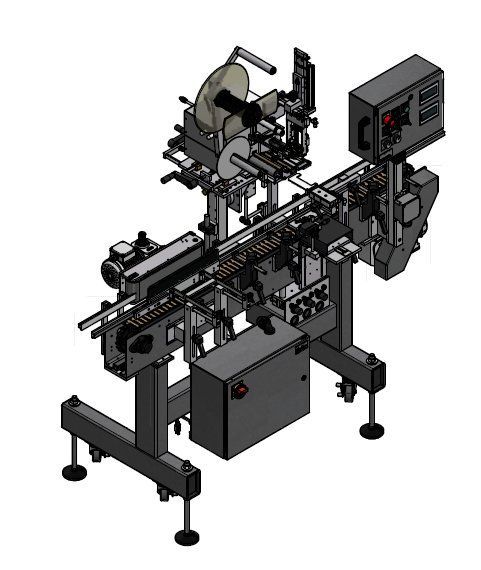
This automatic system automatically applies die cut pressure sensitive labels as a cap strap to a square liquor bottle. Upon detection by the photoelectric product sensor, the bottle is stopped and controlled by a pneumatic fixture and the label is tamped to the top and wiped down the neck. The wipe-down is achieved via a folding tamp head. Production speeds up to 40 products per minute.
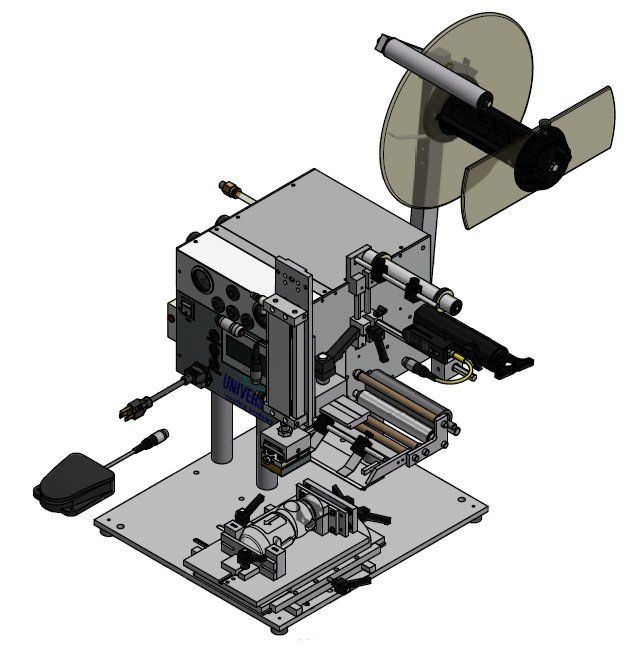
Optimize honey bottle labeling with the L60 semi-automatic machine. Offering high precision and easy operation, it's ideal for honey packaging.
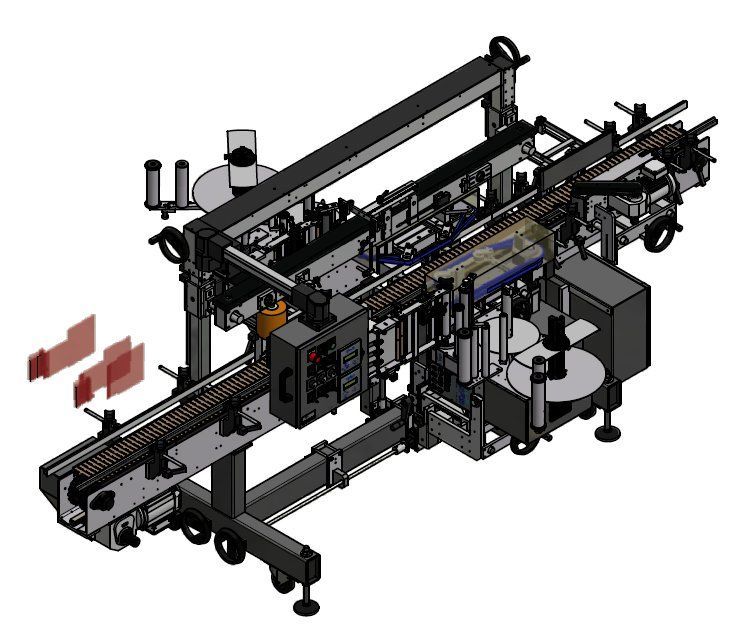
This CP2000 is designed for high volume, high production speeds for labeling rounds, round one gallons with handle orientation, and ovals, and all with a limited changeover time.
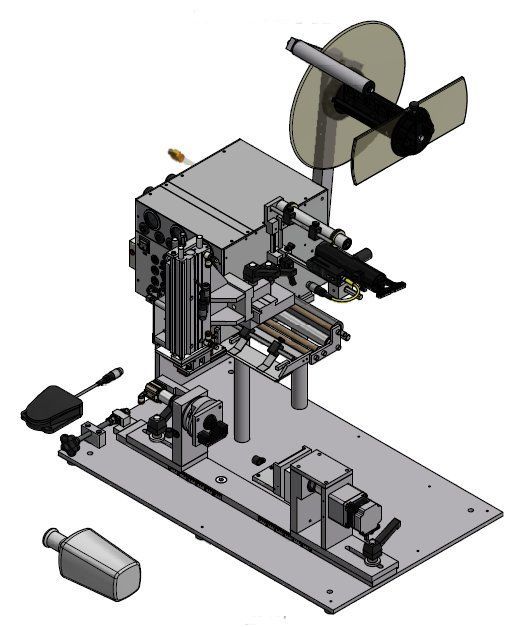
The Universal Labeling Systems L60 tamp rotary is a semi-automatic bottle neck labeling machine for wine, spirits, and liquor bottles. Get a free quote.
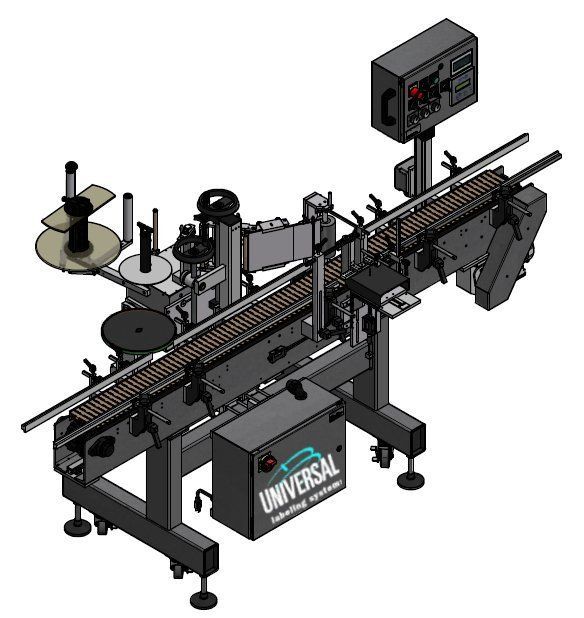
Universal Labeling Systems R321 automatic round product labeling system with orientation — labels 15 to 150 cylindrical products per minute. Get a free quote.
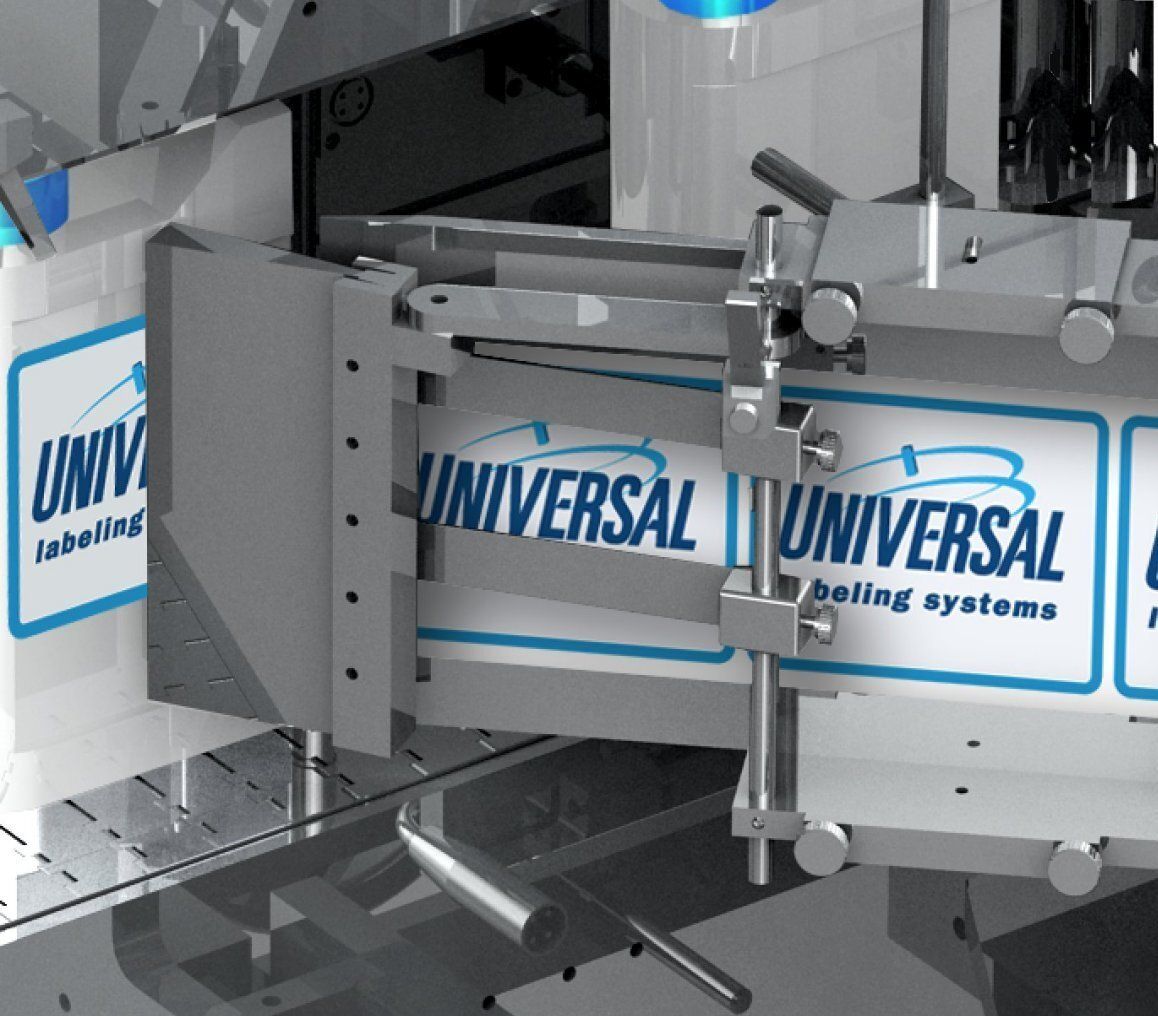
Check out our automatic label applicators — wipe on, tamp, and tamp-blow systems, up to 250 products per minute, made to order in the USA. Get a free quote.
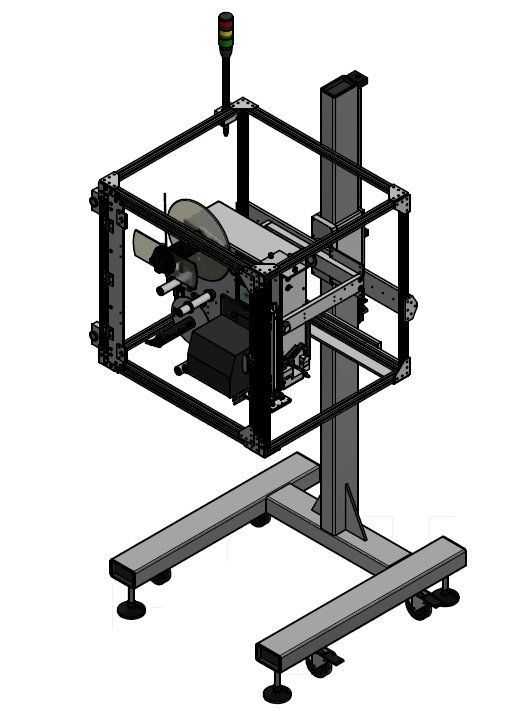
The UPA II enclosed print and apply printer applicator features a protective dust cover with positive air pressure to keep plant elements out. Get a quote.